
There’s a moment that sticks with people. Covering their mouth when they laugh. Turning down a photo. Choosing softer foods without really thinking about why anymore.
If you’re missing one or more teeth, you already know this feeling. It’s not just about appearance. It’s about the small ways you’ve quietly adjusted your life around a gap that wasn’t supposed to be there.
Here’s what most people don’t realize: a missing tooth doesn’t just sit there quietly. It changes how you chew, how your other teeth shift, and eventually, how your jawbone holds up over time.
This is exactly why so many patients start researching Dental Implants Perryville residents can rely on, not just as a cosmetic fix, but as a long term solution built to function like a real tooth again.
This guide walks through everything: why missing teeth matter more than they seem to, what the implant process actually looks like, and what recovery and long term care involve.
Why a Missing Tooth Is a Bigger Problem Than It Looks
When a tooth is lost, the gap doesn’t stay empty and stable. The bone beneath it starts to change almost immediately.
Bone needs stimulation from tooth roots to stay strong and dense. Without that stimulation, it begins to break down, a process called bone resorption. Over time, this can change the shape of your jaw and even affect facial structure.
Meanwhile, nearby teeth often begin drifting toward the open space. This can throw off your bite, create new gaps, and make chewing less comfortable than it used to be.
Why Waiting Makes This Harder to Fix
The longer a missing tooth goes unaddressed, the more complicated treatment tends to become.
- Bone density continues to decrease, which can eventually limit implant options without additional bone grafting.
- Shifting teeth can create bite problems that affect the entire mouth, not just the gap.
- Chewing on one side to avoid the missing tooth can strain your jaw joint over time.
- Gum tissue around the gap can recede or change shape.
- Confidence and comfort in social situations often decline gradually, without people even realizing why
None of this is meant to alarm you. It’s meant to explain why so many dentists recommend addressing a missing tooth sooner rather than later.
What Makes Dental Implants Different
Bridges and dentures replace what you see above the gumline. Dental implants go a step further.
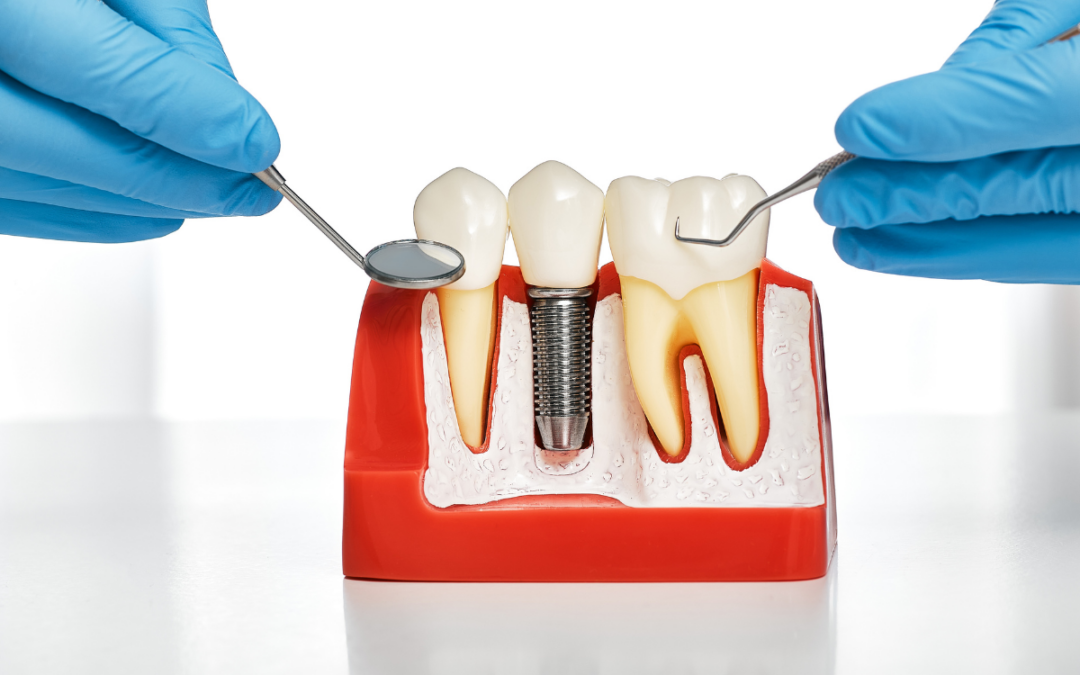
An implant replaces the entire tooth structure, root included. A small titanium post is placed into the jawbone, where it fuses with the bone over time through a process called osseointegration. This creates a stable, permanent foundation, and then a custom crown is attached on top.
This is a major reason implants tend to feel and function more like natural teeth. They also help preserve jawbone density, since the implant provides the same kind of stimulation a natural tooth root once did.
The Dental Implant Process, Step by Step
Step 1: Consultation and Planning
Your dentist evaluates your jawbone, gum health, and overall dental history to build a plan specific to your mouth. Imaging technology helps map out the exact placement needed.
Step 2: Implant Placement
The titanium post is placed into the jawbone during a minor surgical procedure, typically done with local anesthesia for comfort.
Step 3: Healing and Osseointegration
Over the following months, the implant fuses with the surrounding bone. This is what gives implants their strength and long term stability.
Step 4: Abutment and Crown Placement
Once healing is complete, a connector piece called an abutment is attached, followed by a custom made crown designed to match your natural teeth.
Step 5: Long Term Care
With proper care, implants are designed to last for many years, sometimes decades, functioning much like natural teeth.
Trusted Implant Care in Perryville
At Perryville Family Dental, every implant plan starts with a full evaluation, not a one-size-fits-all approach. Every mouth heals differently, and every patient’s bone structure and goals are a little different too.
We walk patients through each stage of the process in plain language, from the first consultation through final placement, so there are no surprises along the way.
Patients throughout Perryville and the surrounding area choose our office because we prioritize a comfortable experience and a result that’s built to last, not just a quick procedure.
Your Smile Deserves a Permanent Solution
A missing tooth doesn’t have to be something you simply adjust to living with. The right treatment can restore how your mouth functions, protect your jawbone, and give you back the confidence to smile without thinking twice.
If you’ve been putting off replacing a missing tooth, or you’re just starting to explore your options, now is a good time to get real answers.
Schedule your dental implant consultation with Perryville Family Dental today, and find out what your smile could look like with a solution built to last.
Frequently Asked Questions
1. How long do dental implants last?
With proper care and regular checkups, dental implants can last for decades, and in many cases, a lifetime. The crown on top may eventually need replacement due to normal wear, but the implant post itself is designed for long term use.
2. Is getting a dental implant painful?
The procedure is typically done under local anesthesia, so patients feel little to no pain during placement. Mild soreness afterward is normal and usually manageable with over-the-counter pain relief.
3. How long does the entire dental implant process take?
The full process, from placement to final crown, often takes several months, mainly due to the time needed for the implant to fuse with the jawbone. Some cases may qualify for a faster timeline, depending on bone health.
4. Am I too old to get a dental implant?
Age alone doesn’t disqualify most patients. What matters more is overall gum health, bone density, and general health, all of which are evaluated during a consultation.
5. What happens if I don’t have enough jawbone for an implant?
Bone grafting is often an option to rebuild bone density before implant placement. This is a common solution for patients who have experienced bone loss from a long standing missing tooth.
6. Can dental implants fail?
While uncommon, implant failure can happen, often related to insufficient bone integration, infection, or inadequate care. Following aftercare instructions and attending regular checkups significantly reduces this risk.
7. How do I care for a dental implant after it’s placed?
Implants are cared for much like natural teeth, through regular brushing, flossing, and dental visits. Good oral hygiene is one of the biggest factors in long term implant success.
8. Are dental implants better than a bridge or denture?
Implants are the only option that replaces the tooth root, which helps preserve jawbone density over time. Bridges and dentures can be effective solutions too, but they don’t offer that same bone preserving benefit.
Ready to Explore Your Options?
You don’t have to keep adjusting your life around a missing tooth. Perryville Family Dental is here to walk you through every step, from your first consultation to a smile built to last. Reach out today to schedule your dental implant evaluation.
Medical Disclaimer: This article is for general educational purposes only and is not a substitute for professional dental or medical advice, diagnosis, or treatment. Always consult a licensed dental professional regarding your specific condition before making treatment decisions.